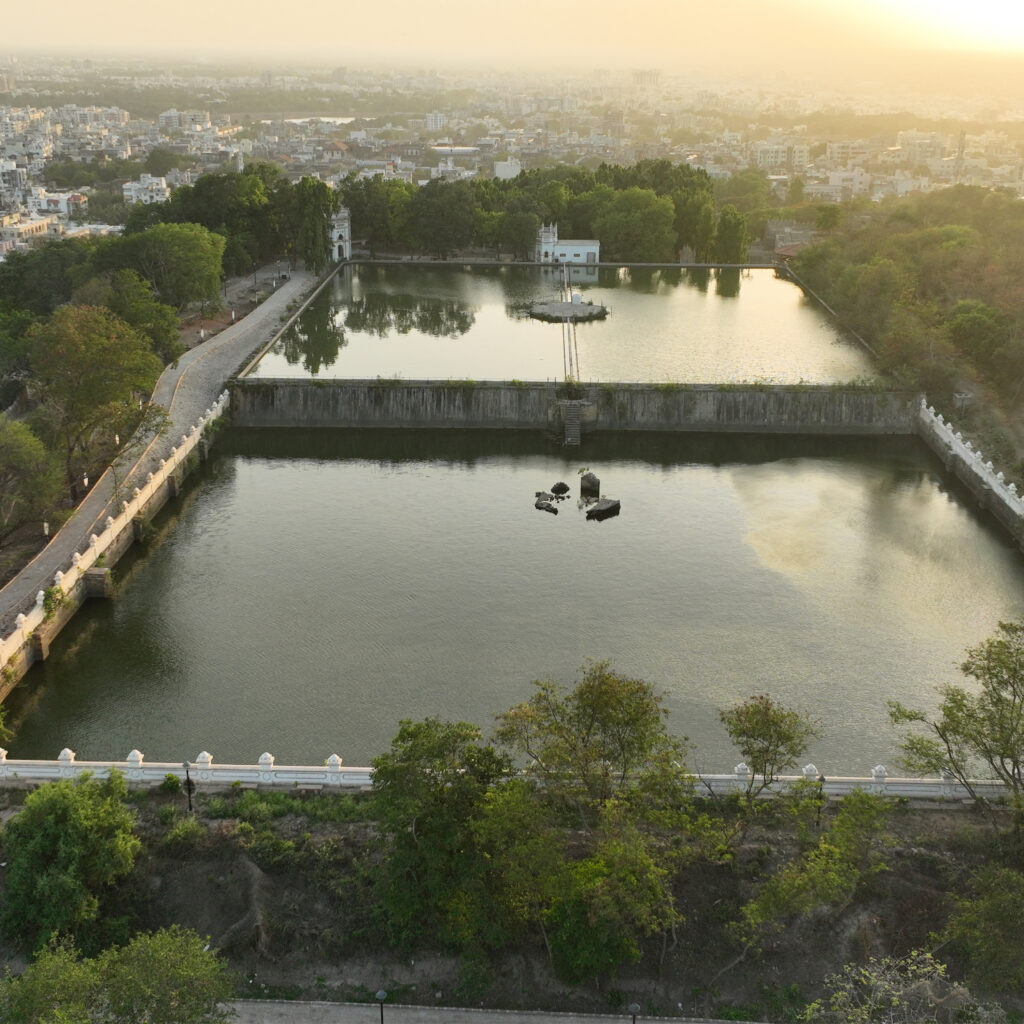
Rani Rupmati's Pavilion: A Poetic Haven within Uparkot Fort
Rani Rupmati’s Pavilion, a sublime architectural gem ensconced within the historic precincts of Uparkot Fort, whispers tales of love, royalty, and timeless beauty. This pavilion, named after the legendary queen, stands as a poetic testament to the enchanting narratives that unfolded within the fortress walls.
Architectural Elegance
Rani Rupmati’s Pavilion is a marvel of architectural elegance, offering a regal retreat with a panoramic view of the surrounding landscapes. The pavilion’s design reflects a perfect blend of Mughal and Hindu architectural styles, creating an enchanting ambiance that captures the spirit of a bygone era.
Architectural Elements
The pavilion’s architectural elements showcase a fusion of Mughal and Hindu design motifs. Intricate archways, delicately carved pillars, and ornate jharokhas contribute to the pavilion’s aesthetic grandeur. Every detail reflects the exquisite taste of the royalty that once graced these halls.
Cultural Significance
Rani Rupmati’s Pavilion has served as an enduring muse for artists and poets. Its cultural significance extends beyond its architectural beauty, inspiring creative expressions that celebrate the intersection of love, history, and nature within the fortress walls.
Scenic Panorama
Step onto the pavilion’s terrace and be mesmerized by the scenic panorama that unfolds before you. Overlooking the meandering Narmada River and the picturesque landscape, Rani Rupmati’s Pavilion provides a breathtaking vantage point, inviting visitors to savor the same views that once captivated the queen’s heart.
Preserving Love's Legacy
Rani Rupmati’s Pavilion stands as a cherished symbol of love’s enduring legacy within Uparkot Fort. Its preservation invites modern explorers to step into the world of queens and kings, where love stories were etched into the very stones. Explore the pavilion and become part of the timeless romance that continues to resonate within its walls.